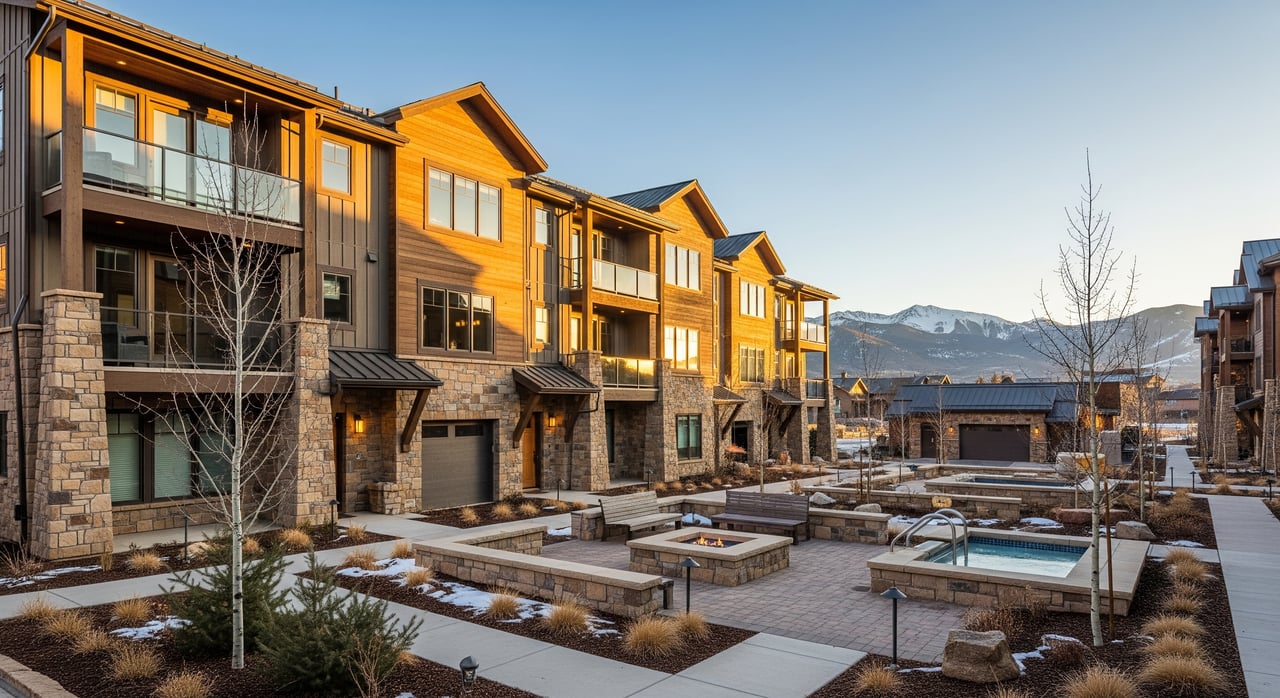
Wondering what your Durango townhome HOA fee actually pays for? You are not alone. HOA dues can feel mysterious until you see how they fund daily upkeep, long-term repairs, and risk protection for your community. In this guide, you will learn what fees typically cover, what they do not, how Durango’s climate affects costs, and the smartest steps to review an HOA before you buy or sell. Let’s dive in.
What HOA fees cover in Durango
Common-area upkeep
Your dues usually fund routine maintenance of grounds and shared spaces. That includes landscaping, lawn and tree care, irrigation systems, and cleaning or repairs for walkways and drives. In Durango, snow removal for sidewalks, driveways, community parking areas, and private roads is often a major budget line. Freeze-thaw cycles can increase pavement crack sealing and gutter or downspout work each year.
Exterior and structural items
Some townhome communities place exterior siding, paint, and roof repair or replacement under the HOA’s responsibility. Others leave parts of the exterior to owners. The exact split depends on your governing documents and how the property defines limited common elements. Always confirm who pays for exterior work before you rely on the HOA to handle it.
Master insurance
Most HOAs carry a master insurance policy for common areas and sometimes building exteriors. This protects the association against property damage and liability on shared elements. It does not replace your own HO-6 policy for interior finishes, personal property, and personal liability. In Durango, review wildfire and severe-weather exposures along with the policy deductible and any loss assessment provisions.
Utilities that may be included
It is common for HOAs to pay for water, sewer, exterior lighting, and common-area electricity. Some communities include trash and recycling. A few offer bulk internet or TV services. Individual unit gas and electric are often separate unless the complex is master-metered. Always check what is included in your specific HOA.
Reserve fund and capital projects
A portion of your monthly dues typically goes to a reserve fund for big-ticket items like roof replacement, paving, and major mechanicals. Healthy reserves reduce the chance of costly special assessments later. If reserves are low and large projects are looming, owners may face one-time assessments to cover the gap.
Management and administration
Professional property management, accounting, legal, tax filings, and owner communications are common HOA costs. Even self-managed communities have administrative expenses, such as meeting notices, mailings, and software. Management structure affects dues, so expect higher fees in communities with full-service professional oversight.
Amenities and services
Pools, fitness rooms, clubhouses, trails, gated entries, elevators, and on-site maintenance staff all add to operating costs. In Durango, you may also see shared parking upkeep, natural open space landscaping, and trail access maintenance. The more amenities and contracts in place, the higher the likely monthly dues.
Safety, compliance, taxes, and insurance on common elements
Your HOA may fund security systems, lighting, and fire-safety features in common areas. The association also covers costs to meet local codes or compliance needs, including stormwater controls where applicable. Property taxes and insurance on association-owned assets are typically paid from the operating budget.
What HOA fees usually do not cover
- Interior maintenance of your unit, such as appliances and fixtures, unless governing documents say otherwise.
- Your personal property, interior finishes, or personal liability. You will generally need an HO-6 policy.
- Mortgage payments and your individual property taxes.
- Special, one-time costs that the association may address through a special assessment.
- Fines, late fees, or violation costs assessed to an owner.
Why dues vary in Durango
Durango’s location and climate play a real role in HOA costs.
- Scope of services. More amenities and included utilities lead to higher dues.
- Building age and condition. Older communities often require higher reserves and more frequent repairs.
- Reserve policy. Fully funded reserves tend to mean steadier dues with fewer large surprises.
- Ownership structure. If the HOA owns or maintains exteriors and roofs, fees are usually higher than in communities where owners handle their own exteriors.
- Management model. Professional management adds administrative cost compared with volunteer-run HOAs.
- Climate and geography. Snow removal, ice mitigation, and freeze-thaw maintenance increase costs. Wildfire risk influences insurance pricing and mitigation work.
- Local labor and contractor rates. Mountain-area service costs can differ from urban markets.
Typical monthly ranges
Actual dues vary by community and service level, but regional patterns can help you set expectations.
- Basic maintenance: roughly $50 to $200 per month.
- Standard services with reserves: roughly $150 to $400 per month.
- Amenity heavy or full-utility coverage: $300 to $700+ per month.
Use these figures as a starting point only. Always confirm the exact dues and inclusions in the current budget and association statements for your specific townhome.
How to review an HOA like a pro
A thorough review gives you a clear picture of costs and risks. Request these items early in your contract period.
- Governing documents. CC&Rs, bylaws, rules, and a clear diagram that shows owner versus association responsibilities for exteriors and limited common elements.
- Financials and reserves. Current budget, recent financial statements, reserve study or funding policy, reserve balance, and the schedule of dues with any announced increases.
- Insurance. Master policy declarations that outline coverage, limits, and deductibles. Ask about recent claims and the carrier.
- Assessments and fees. Notices of pending or recent special assessments, plus any transfer, capital contribution, or move-in fees.
- Operations. Contracts for snow removal, landscaping, elevators, and management. Board meeting minutes for the last 6 to 12 months to spot issues in progress.
- Legal and compliance. Disclosures of pending litigation and any known municipal or county compliance items.
- Restrictions. Rental and short-term rental policies, pet rules, parking, and limitations on exterior changes.
Durango-specific questions to ask
- Snow plan. How is snow stored, and who handles ice treatment and private road plowing?
- Wildfire mitigation. What mitigation measures exist, and what are owners required to do for defensible space?
- Utilities. Are any services master-metered or shared, such as water or septic, and how are costs allocated?
- Short-term rentals. Are STRs permitted, restricted, or prohibited by the HOA rules or local ordinances?
- Exterior responsibility. Who pays for roof, siding, and window replacement, and what are the timelines for future projects?
Red flags that call for a closer look
- No reserve study or a very low reserve balance with aging roofs or paving.
- Recent or frequent special assessments for major repairs.
- High owner delinquency that strains cash flow.
- Ongoing or significant litigation involving the association.
- Rapid management turnover or weak financial controls.
- Governing documents that unexpectedly shift exterior costs to owners.
- Unusually high master policy deductibles or missing key coverage.
Smart insurance planning for townhomes
Your HOA’s master policy usually covers the building exterior and common areas. You will likely still need an HO-6 policy for interior finishes, personal property, and liability. Ask your insurance agent about loss assessment coverage, which can help if the HOA assesses owners after a covered claim. Compare the master policy deductible with your budget and risk tolerance.
Buying or selling with confidence in Durango
A clear understanding of HOA fees protects your budget and reduces surprises at closing. If you gather the right documents, read the reserve study, and confirm who pays for exterior elements, you will make a more confident decision. For hands-on guidance on specific Durango townhome communities, local due diligence, and negotiation strategy, connect with Jeremiah Aukerman - eXp Realty Luxury.
FAQs
What do Durango townhome HOA fees usually include?
- Common-area maintenance, snow removal, some exterior work depending on documents, master insurance for shared elements, reserves, and management costs.
Do HOA dues in Durango typically cover snow removal?
- Yes, most townhome HOAs fund snow plowing and removal for sidewalks, driveways, parking areas, and private roads within the community.
Who is responsible for roof and exterior repairs?
- Responsibility varies by community. Check the CC&Rs and diagrams that define limited common elements and owner versus association obligations.
Are utilities included in my monthly fee?
- Often water, sewer, exterior lighting, and common-area electricity are included. Trash and recycling may be included. Individual unit gas and electric are commonly separate.
What is a special assessment, and when does it happen?
- A special assessment is a one-time charge levied by the HOA for large or unexpected costs, often due to underfunded reserves or urgent repairs.
How can I tell if an HOA’s reserves are healthy?
- Review the reserve study, current reserve balance, and the replacement schedule for major items like roofs and paving. Low reserves signal higher risk of special assessments.
Does the HOA’s master insurance cover my unit interior?
- Typically no. You usually need an HO-6 policy for interior finishes, personal property, and personal liability, plus loss assessment coverage if appropriate.
What documents should I review before closing on a townhome?
- CC&Rs, bylaws, rules, current budget and financials, reserve study, master insurance declarations, board minutes, disclosure of assessments, fees, and any pending litigation.